At least 69 jurisdictions across the United States have passed outright bans on new data center construction
Published by RawNews1st
7:17 am (May 24, 2026)
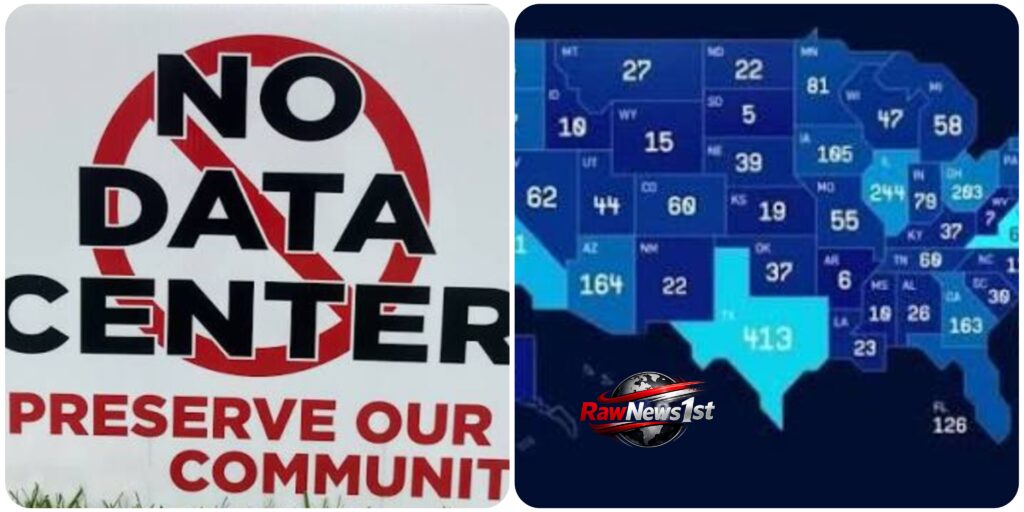
America is fighting back against the AI land grab — and the numbers don’t lie. As of this month, 69 U.S. jurisdictions have active moratoriums blocking new AI data center construction. Four of those bans are permanent.
One year ago, only eight such bans existed across the entire country. From March to April alone, 14 new restrictions were enacted. The wave is accelerating — and it’s crossing party lines.
The reasons are hard to argue with. A single AI data center can gulp down 5 million gallons of water every single day. In Minnesota, just 13 proposed facilities would demand the same electricity it takes to power all 2.3 million homes in the state. For rural communities already straining under drought conditions and grid pressure, the math doesn’t work.
The bans are coming from red counties and blue cities alike. Conservative communities are pushing back over water rights and power grid strain. Progressive cities cite environmental destruction. Tech companies warn the restrictions will slow innovation and cost American jobs. But so far, those arguments aren’t moving the needle — the bans keep piling up.
Four of them are now written in permanently. Seventy-eight total restrictions are now on the tracker — up from eight a year ago. This isn’t a local trend anymore. It’s a national reckoning.
More than 4,000 are already in operation, mostly in Virginia, Texas, and California, and 3,000 more are being planned or under construction.
Data center developers and tech giants argue the projects benefit communities by creating new jobs and boosting local economic development through increased property tax revenue and future business opportunities. They also note that infrastructure must grow if the nation wants to remain a global AI power.
How much water and electricity do data centers require on average?
The standard definition of a hyperscale data center is that it is more than 10,000 square feet with more than 5,000 servers. But even that is way below the current standard of the data centers that are being built today.
Just a few miles from where I live in Ann Arbor there is a big project, part of OpenAI’s Stargate Project in Saline Township, Michigan, where the plan is for it to be over 2 million square feet and use 1.4 gigawatts of energy. That is equivalent to the energy use of a million households.
What is important here is not just the scale of an individual data center, but also the number of data centers that are being developed at rapid pace across the country, which is fueling a massive expansion in energy and water demand.
Estimates suggest that within a couple of years, the electricity needed for data centers is going to be around 10 to 15 percent of total nationwide electricity demand. This means that the data center boom is putting severe strain on efforts to move the country toward renewable energy sources, often by prolonging the use of fossil fuel plants that had been slated for closure.