AI, Data Centers, and the Future of Work: Are We Ready for What’s Coming?
Published by RawNews1st
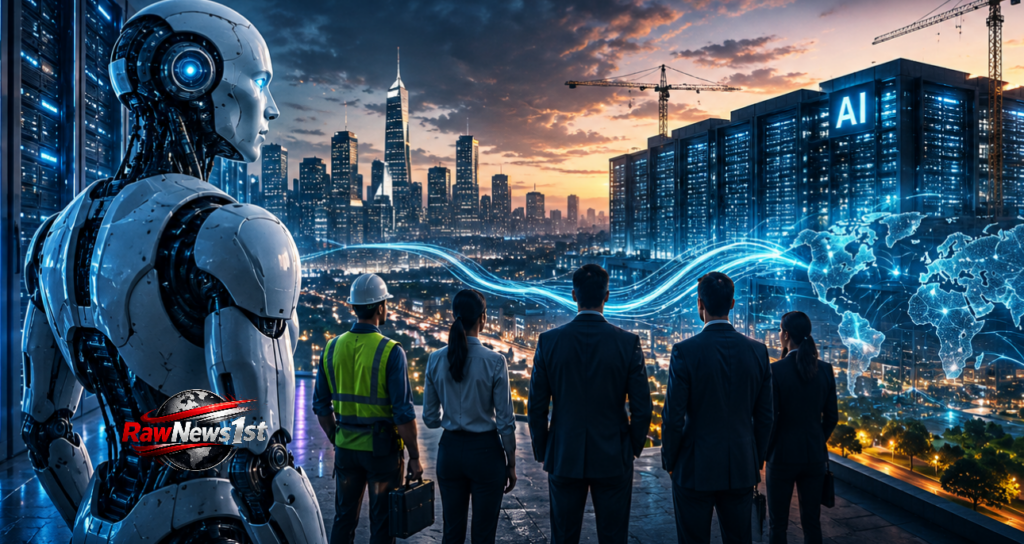
Artificial Intelligence is no longer a futuristic concept—it is rapidly becoming the driving force behind industries worldwide. From customer service chatbots and automated warehouses to AI-generated content and advanced robotics, technology is transforming how businesses operate. Behind this revolution are massive data centers, enormous facilities that power AI systems and consume vast amounts of electricity, water, and computing resources.
Major tech companies are investing billions into new AI infrastructure, racing to build larger and more powerful data centers. While these developments promise innovation, efficiency, and economic growth, they also raise important questions about the future of human employment. Many jobs once considered secure are now being partially or fully automated, creating uncertainty for workers across multiple industries.
Experts remain divided on what comes next. Some believe AI will create entirely new career fields, much like the internet did decades ago. Others warn that automation could replace millions of jobs faster than society can adapt. Roles involving repetitive tasks, data entry, transportation, and even some creative professions are already feeling the impact.
The concern extends beyond employment. As AI becomes more capable, governments, businesses, and communities face growing pressure to establish ethical guidelines, workforce retraining programs, and safeguards against overreliance on machines. The challenge isn’t simply whether AI will replace jobs—it’s whether humanity can adapt quickly enough to coexist with increasingly intelligent systems.
The AI revolution is here, and the world stands at a crossroads. The decisions made today regarding technology, education, and workforce development could shape the global economy for generations. The future may be powered by artificial intelligence, but it must still be guided by human wisdom.
AI and data centers generate two distinct types of employment: massive, temporary construction jobs and a much smaller number of permanent roles. While the AI industry itself may eliminate or reshape millions of office roles, the physical construction and ongoing maintenance of AI data centers drive a completely different labor trend.
The intersection of artificial intelligence and data centers is triggering a massive shift in the global workforce, displacing white-collar office positions while bottlenecking highly technical physical infrastructure roles. The impact is highly polarized: while AI software is driving record-breaking corporate layoffs, the physical data centers powering that software actually employ surprisingly few permanent on-site workers.