Texas lost its bid for a temporary restraining order to halt the proposed sale of 23andMe’s genetic data bank
Judge Brian C. Walsh of the US Bankruptcy Court for the Eastern District of Missouri said during a Wednesday hearing that the state’s arguments are based on the possibility of harm that may not be imminent, as the sale hasn’t yet been approved by the court.
“It doesn’t show more than a possibility,” Walsh said. “Texas can’t know if it will be approved.”
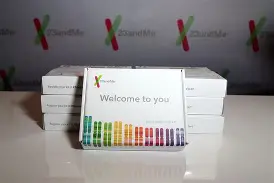
23andMe co-founder Anne Wojcicki recently won an auction for the firm’s assets, along with TTAM Research Institute, for $305 million. Regeneron Pharmaceuticals was named the backup bidder in the event Wojcicki and TTAM fail to close the sale.
The firm is in court seeking authorization to finalize the transaction, which has the support of a committee representing unsecured creditors. 23andMe lawyers said Wednesday that they aim to complete the sale hearing by Friday, though the influx of objections from several states may complicate matters.
The proposed transaction involves 23andMe creating a wholly owned entity referred to in court papers as NewCo, established in Delaware. The firm would then transfer data and other assets to NewCo in exchange for a $305 million promissory note. TTAM would purchase all outstanding equity in NewCo.
The structure, according to the firm, would facilitate the transfer since affiliates aren’t considered third parties and would enable a sale free of liens.
Wojcicki and TTAM committed to protecting sensitive customer data for as many as 15 million people who mailed in saliva samples to the company. TTAM would offer customers two years of identity theft monitoring from Experian, according to court papers.
Texas filed its complaint arguing that under state law, the Texas Direct-to-Consumer Genetic Testing Act, residents have exclusive property rights over their genetic material and data.
The state contends that 23andMe lacks sufficient ownership to sell or transfer information without obtaining separate, express consent from each customer and that consumers’ click-through acceptance of 23andMe’s service terms doesn’t meet the requirement under state law.
Layla Milligan, an attorney at the Texas Attorney General’s Office, argued during the hearing that the data sale would trigger the law as it would be transferred to a “different entity,” which would require extra consent.
States including California, Tennessee, and Utah have filed objections related to the sale structure and what they say is a need for additional customer consent, with more objections anticipated.
“This would allow a transfer against Texas law, and we can’t recover data once it is transferred,” she said.