Over 200M Americans brace for impact: Winter weather alert
Published by RawNews1st
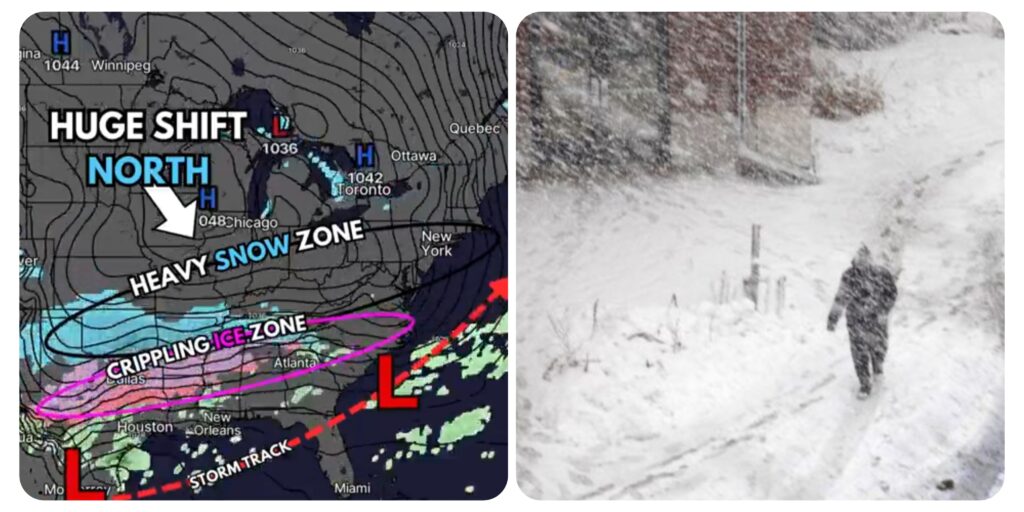
As millions gear up for the first major winter storm of the year, forecast models remain in generally good agreement, showing snow, ice, rain and sleet stretching from the southern Plains into the Mid-Atlantic. As of Wednesday, some of the more reliable models, including the European, had shifted slightly north, a change that could bring greater impacts to the Mid-Atlantic, the Midwest and Ohio Valley, and even the Northeast.
One of the greatest concerns is significant icing along Interstates 20 and 40 from Dallas to Atlanta and into the Carolinas, which could make travel impossible and trigger widespread power outages.
There is still plenty of time for the models to shift the storm farther south. The Weather Prediction Center noted in its discussion that models often struggle with the storm’s northern and southern components this far in advance — especially the northern piece, which remains in Canada.
The WPC wrote, “Thus we tend to think that the unanimous model trend could be a slight mirage and suggests more confidence in a solution than there actually is at this point. Either way, it should be stressed that in just about every outcome we get a widespread and major winter storm, with many areas seeing significant impacts regardless of these exact details.”
“We are seeing the computer model guidance giving us more confidence — a 70 to 80% chance — that most of the swath will get more than 4 inches of snow,” Shieh said. “There will be isolated areas where they get over a foot. It’s still too early to pinpoint where that might be, but confidence is increasing. And on the ice side, about a quarter inch of ice accumulation for a good portion of the swath looks pretty likely.”
The state of emergency activates the South Carolina Emergency Operations Plan, which allows state agencies to quickly mobilize resources, allow the state National Guard to activate personnel and prepare equipment, and allows state and local emergency management officials to start coordinating response efforts.
In North Carolina, Governor Josh Stein said the state’s emergency response team is already working to make sure resources are in place to keep residents safe.