Newly released emails linked to Jeffrey Epstein’s case reportedly reference the Dalai Lama at least 169 times
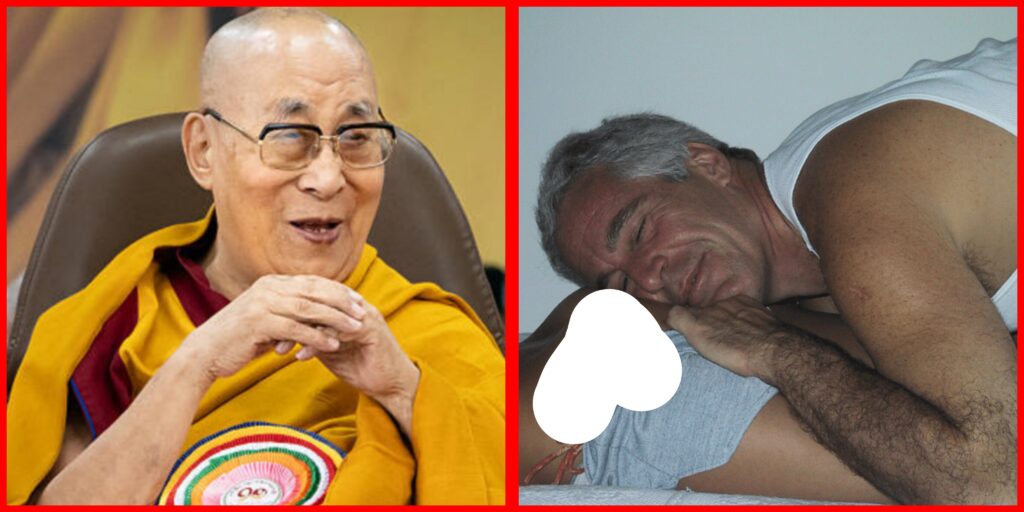
Newly released emails linked to Jeffrey Epstein’s case reportedly reference the Dalai Lama at least 169 times.
Reports said some emails dated October 2012 suggest the Tibetan buddhist spiritual leader met Epstein.
The same emails also suggest he was expected to attend an event with Epstein. European outlet Nexta TV claimed individuals described as followers of the Dalai Lama may also have met Epstein.
Journalist Michael Wolff said on a ‘Daily Beast’ podcast that the Dalai Lama was among the figures present at gatherings at Epstein’s Manhattan townhouse.
“Yes. First step would be to meet Tenzin. His student who runs the Dalai Lama center and is now a Director’s Fellow at the Lab and going to start the ‘ethics initiative’ at the Media Lab. We’re working on some cool things like a meeting about cognitive machines and man. I think you’ll probably like him. He can get us the Dalai Lama,” reads another email sent to Epstein on May 10, 2015.
In another email the following day, Epstein writes: “I’m working on the dalai lama for dinner.”
The Dalai Lama’s office has not publicly commented on the references in the newly released documents.
American journalist and consultant Michael Wolff, who had acted as an advisor to Epstein, recalled in a podcast with host Joanna Coles for the Daily Beat last July that he met the Dalai Lama at Epstein’s Manhattan residence.
“Did you actually meet the Dalai Lama at Jeffrey Epstein’s?” asked Coles.
“Yeah, indeed,” Wolff responded, adding that Epstein met many known figures at that house.
Born Tenzin Gyatso, the 90-year-old Dalai Lama, was announced as a Grammy winner on Sunday for his audiobook Meditations: The Reflections of His Holiness The Dalai Lama.
The Buddhist leader has also been linked to past controversies, including an incident in 2023 in which he was filmed asking one of his young male students to “suck my tongue,” prompting widespread public backlash.
China took control of Tibet in 1951, describing the move as a “peaceful liberation.” Following a failed uprising against Chinese rule in 1959, the Dalai Lama fled to Dharamsala in northern India, where he later established a Tibetan parliament and government-in-exile.
Beijing does not recognize this administration, asserting that Tibet has been part of China since the 13th century. The Dalai Lama, however, maintains that Tibet was an independent state at the time the Chinese People’s Liberation Army entered the region.