How the Federal Reserve Manages Money Supply: Is this system outdated
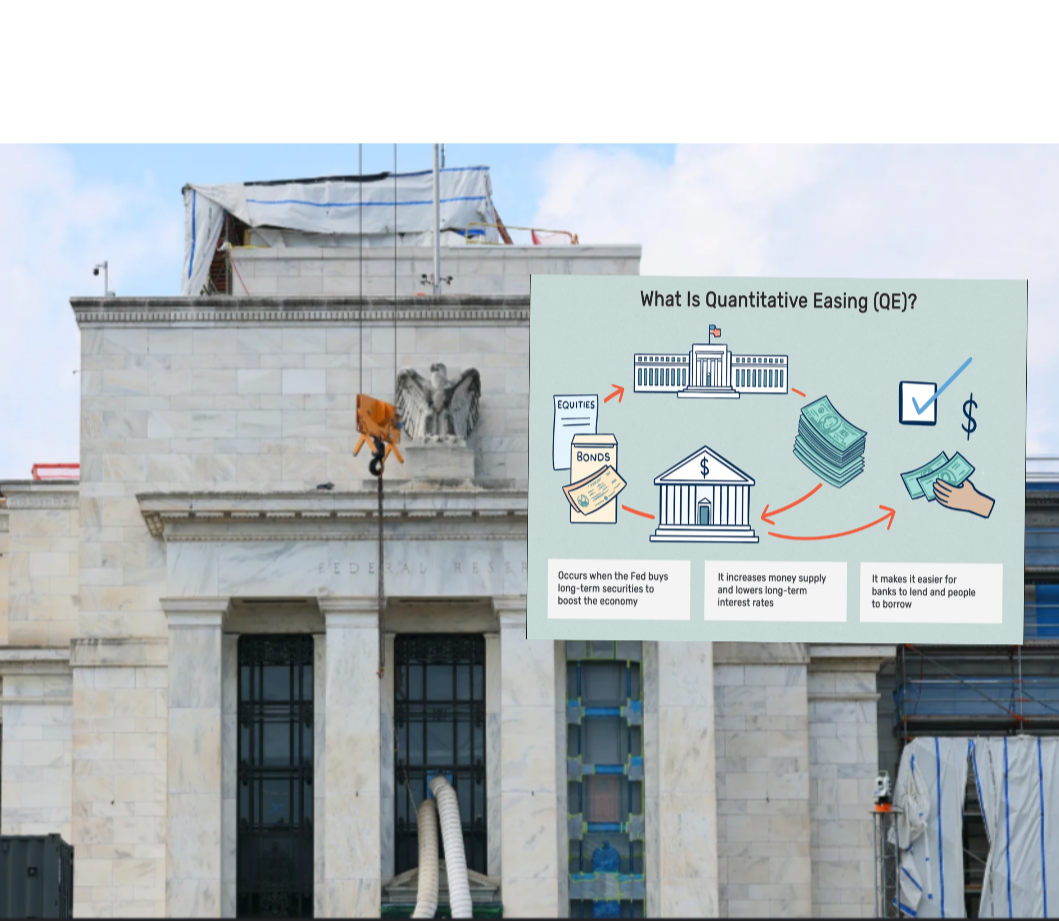
The Federal Reserve is not owned by any individuals or private entities in the traditional sense, but rather has a unique hybrid structure incorporating both public and private aspects. It was established by the U.S. Congress to serve the public interest.
However if you do a little digging into a lot of information. The Rockefellers, particularly through their control of Chase National Bank, were major players in the financial world at the time.
Their influence, combined with that of other powerful banking families like the Morgans and Kuhn, Loeb & Co., helped shape the debate surrounding the need for a central bank.
J.P. Morgan and the Federal Reserve are interconnected through history and their roles in the US financial system. J.P. Morgan played a key role in the formation of the Federal Reserve System, and the two institutions continue to interact in various capacities, including policy influence and regulatory oversight.
The Federal Reserve System was established in the United States on December 23, 1913, with the signing of the Federal Reserve Act by President Woodrow Wilson. This means the Federal Reserve has been in operation for over 111 years.
Its creation aimed to address instability in the American banking system, particularly financial panics like the one in 1907.
The Fed uses its tools to control the supply of money to help stabilize the economy. When the economy is slumping, the Fed increases the supply of money to spur growth. Conversely, when inflation is threatening, the Fed reduces the risk by shrinking the money supply.
The Bottom Line
Today, the Fed uses its tools to control the supply of money to help stabilize the economy. When the economy is slumping, the Fed increases the supply of money to spur growth. Conversely, when inflation is threatening, the Fed reduces the risk by shrinking the money supply. While the Fed’s mission as a “lender of last resort” is still important, the Fed’s role in managing the economy has expanded since its establishment.
How Much Money Does the Federal Reserve Have?
As of the end of 2024, the total assets on the Fed’s balance sheets were worth $7 trillion. This includes $4.5 trillion in U.S. government debt, $2.3 trillion in agency mortgage-backed securities, and smaller amounts of gold, foreign currency, and loans to other institutions.
Which brings me to the conclusion is the federal reserve system outdated?
Lack of accountability and transparency
Critics argue that the Fed’s structure, with its Board of Governors appointed by the President and confirmed by the Senate, and regional Federal Reserve Banks having directors largely from the private sector, lacks sufficient democratic accountability and transparency. They believe this can lead to policies that are not fully aligned with the public’s best interests or that are influenced by private financial sector concerns.
There’s also a perception of insufficient transparency surrounding the Fed’s decision-making processes and programs, which can make it challenging to understand and evaluate its actions, according to Congress.gov.
In 2008, millions of Americans woke up to the reality of how the system is rigged. The Federal Reserve funneled trillions into “too-big-to-fail” banks while Main Street businesses shuttered. Then came 2020, when stimulus checks were handed out to the public while the Fed secretly pumped over $4 trillion into financial markets. Since then, inflation has soared, wages have stagnated, and the cost of living continues to climb.
And yet, the Fed continues to act as if it’s the guardian of economic stability—despite causing the very volatility it claims to control. It has weaponized interest rate manipulation, driven housing prices to absurd levels, and inflated the U.S. dollar into a ticking time bomb.
More Americans are starting to understand that the real scam isn’t crypto, or foreign aid, or unemployment benefits. It’s the Federal Reserve system itself.