High cocaine levels are being detected in sewer water on Nantucket
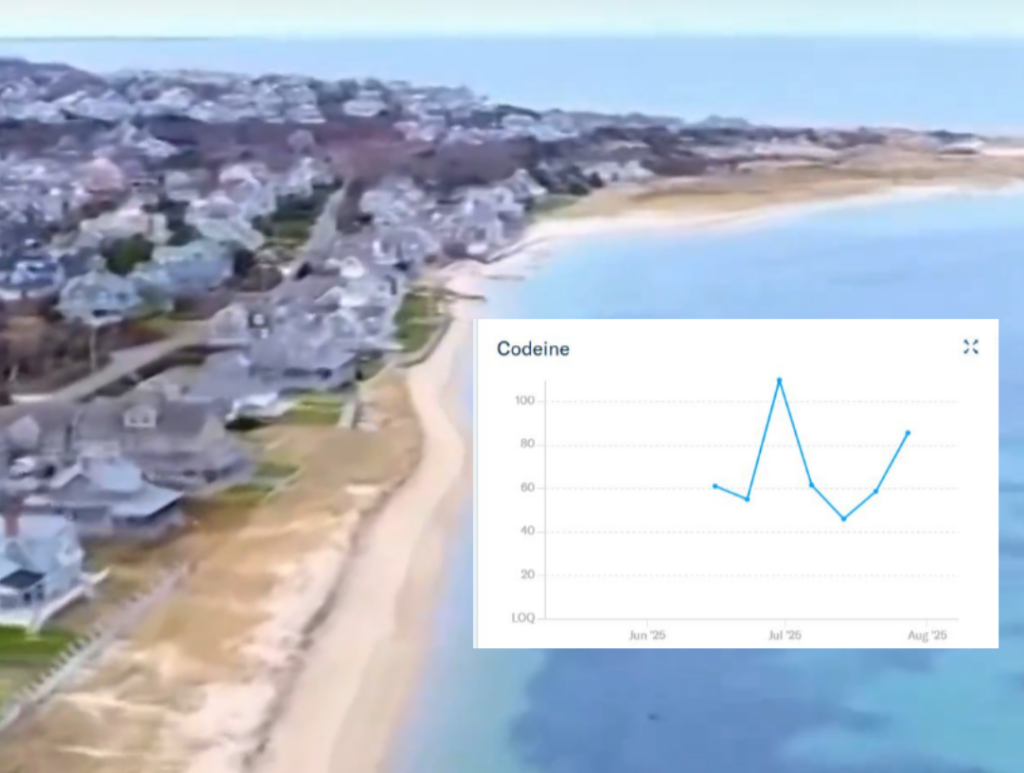
Over that period, the island’s cocaine markers have routinely exceeded national and regional averages, including two spikes in October and December that reached nearly three times the national average, while fentanyl and other opioid data have consistently been well below those same averages.
Testing on Oct. 14 showed cocaine levels just under 3,000 nanograms per liter, compared to a U.S. national average of roughly 1,000 ng/L. Elevated readings were again recorded on Dec. 15 and Dec. 22, when concentrations climbed to roughly 2,700 to 2,800 ng/L before tapering off in January and early February.
Health director Roque Miramontes has said the focus is on tracking local trends over time rather than comparing Nantucket directly to national data
“This activity is still in its early stages, and additional baseline data will help provide a clearer picture,” he said last year. “For high-risk substances and opioids, a sustained increase over several weeks may be a stronger indicator for intervention. We are sharing the data now to begin equipping community behavioral health partners with actionable information.”
The cocaine spikes may not necessarily reflect a surge in use, according to the town’s explanatory notes included with the data.
The dashboard explains that cocaine and the metabolite, benzoylecgonine (BZE), usually rise together because the body converts most consumed cocaine into BZE before it leaves the system. When cocaine increases without a comparable rise in BZE, as it did in some of Nantucket’s data, it may indicate that some of the substance entering the wastewater was not metabolized.
The town notes that this can occur when unused drugs are discarded. But it can also occur when cocaine is used with alcohol, as the body doesn’t break it down as efficiently.
Over the eight-month window, Nantucket’s cocaine levels have frequently measured above both national and Northeast regional averages, even outside of the October and December spikes.
By contrast, fentanyl levels have remained near non-detect for much of the testing period, with only minor shifts. Methamphetamine and xylazine have also consistently tested well below national and regional averages. Nicotine levels have swung but generally remained at or slightly below national averages.