Does your child have Autism and ADHD? New studies say Acetaminophen could play a key role
Published by RawNews1st
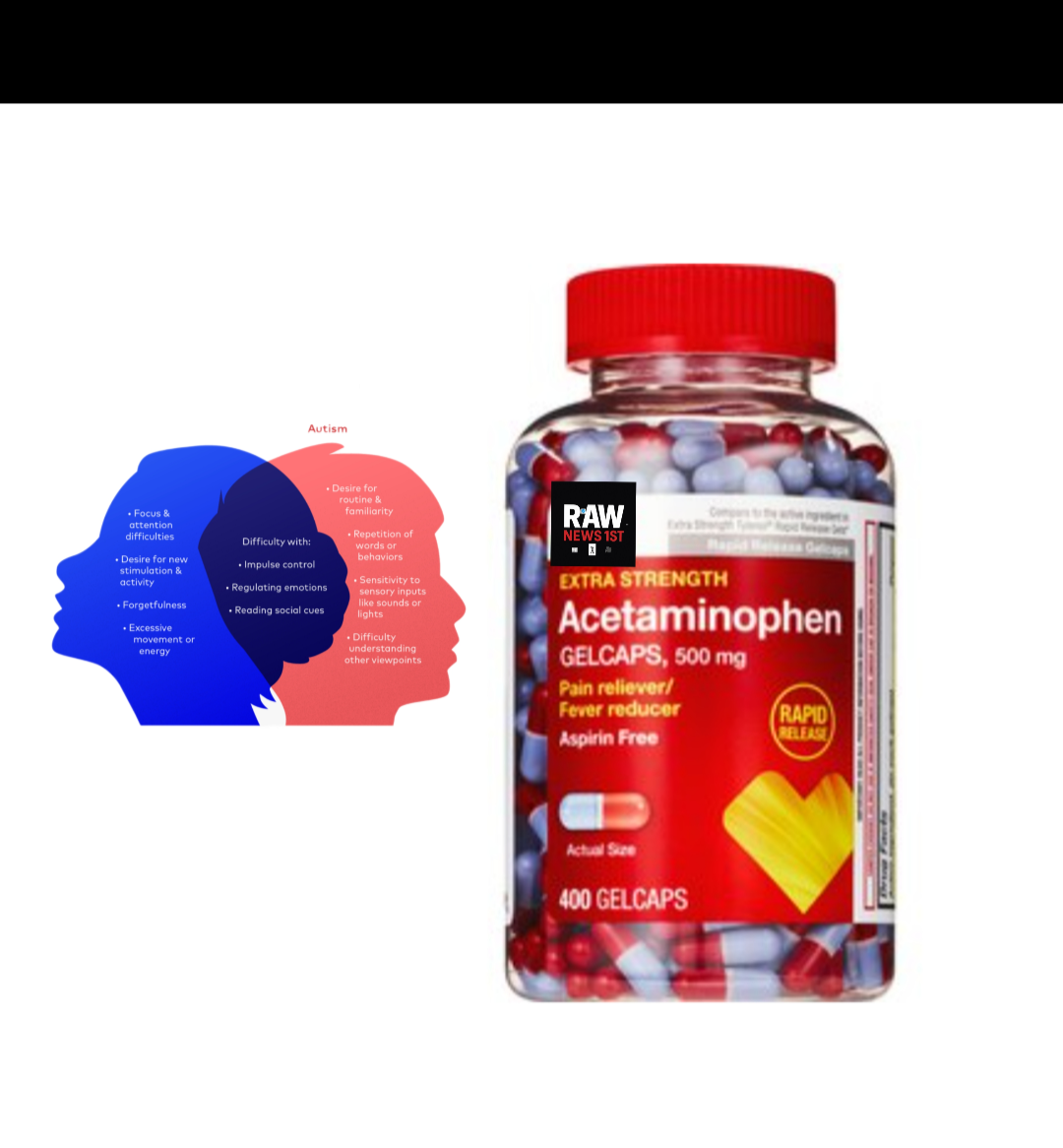
Acetaminophen Use Linked to Autism and ADHD Risk
Research into the potential link between prenatal acetaminophen exposure and increased risks of autism spectrum disorder (ASD) and attention-deficit/hyperactivity disorder (ADHD) has produced conflicting results. While some studies show an association, others find no causal link, citing potential confounding factors. The scientific community has called for more research to clarify the relationship, and lawsuits over the issue are ongoing.
What is Acetaminophen
Acetaminophen is a common over-the-counter (OTC) medication used to relieve minor pain and reduce fever. It is also known as paracetamol and is the active ingredient in hundreds of medications, including Tylenol and many multi-symptom cold and flu remedies.
Several studies have indicated a potential link between prenatal acetaminophen exposure and a higher risk of ADHD and ASD. Some meta-analyses have suggested that prolonged or higher intake of acetaminophen during pregnancy could correlate with an increased risk. Proposed biological mechanisms include effects on the endocannabinoid system, oxidative stress, and inflammation, which might disrupt fetal brain development.
According to the Centers for Disease Control and Prevention (CDC), an estimated 11.4% of children aged 3-17 years in the United States were diagnosed with attention-deficit/hyperactivity disorder (ADHD) in 2022. This translates to approximately 7.1 million children.