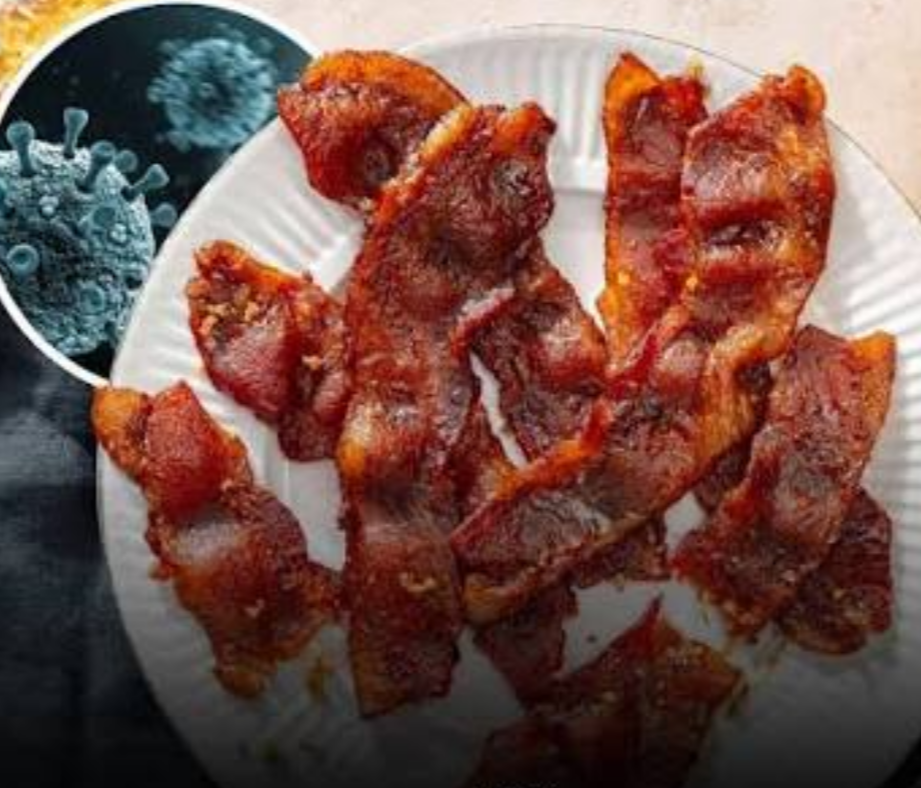
Bacon is in the same cancer category as asbestos and tobacco
Published by RawNews1st
Bacon is in the same cancer category as asbestos and tobacco.
The International Agency for Research on Cancer — part of the World Health Organization — classifies processed meats as Group 1 carcinogens.
Group 1 means: “Sufficient evidence that this substance causes cancer in humans.”
Not “might cause.” Not “possibly linked.” Causes.
The same classification level as:
→ Tobacco smoking
→ Asbestos exposure
→ Plutonium
→ Formaldehyde
And these processed meats:
→ Bacon
→ Ham
→ Salami
→ Hot dogs
→ Sausages
→ Pepperoni
→ Deli meats
This isn’t new research. It’s not one controversial study. It’s the conclusion of extensive reviews analyzing large population studies from multiple countries spanning decades.
THE CANCER LINK
Regular consumption of processed meat increases the risk of colorectal (bowel) cancer. The evidence is strong and consistent across populations.
Additional evidence shows increased risk of stomach cancer, with risk rising as intake increases.
The mechanism: Processed meats contain compounds formed during curing, smoking, or high-heat cooking. These include nitrites, nitrosamines, and polycyclic aromatic hydrocarbons — all known to damage DNA and promote cancer development.
THE RISK SCALE
Here’s what the numbers actually show:
Eating 50 grams of processed meat per day (about 2 slices of bacon or 1 hot dog) increases colorectal cancer risk by approximately 18%.
That doesn’t mean 18% of people who eat bacon get cancer. It means your personal risk increases by 18% relative to baseline.
If your baseline lifetime risk of colorectal cancer is 5%, eating processed meat daily raises it to about 5.9%.
Still a small absolute increase. But across entire populations, that translates to thousands of preventable cancer cases.
THE COMPARISON PROBLEM
“Group 1 carcinogen” sounds terrifying. And it should be taken seriously.
But Group 1 classification is based on strength of evidence that something causes cancer — not how much cancer it causes.
Tobacco smoking increases lung cancer risk by 2,000-3,000%. Processed meat increases colorectal cancer risk by 18%.
Both are Group 1 because the evidence is strong for both. But the magnitude of risk is vastly different.
Eating bacon is not equivalent to smoking. The classification system doesn’t measure potency — just certainty.
WHY PEOPLE STILL EAT IT
Despite knowing this, processed meat consumption remains high globally.
Why?
→ Cultural food traditions (breakfast bacon, holiday hams)
→ Convenience and shelf stability
→ Taste preferences developed over lifetimes
→ Risk feels abstract compared to immediate enjoyment
→ “Everything causes cancer” fatigue
→ Personal risk tolerance varies
Some people eliminate processed meat completely. Others decide the small absolute risk increase is acceptable for foods they value.
Neither choice is objectively wrong. It’s risk management based on personal priorities.
THE HONEST REALITY
Processed meats do increase cancer risk. The evidence is solid.
But so do many things:
→ Alcohol (also Group 1)
→ UV radiation from sunlight
→ Air pollution in cities
→ Grilled/charred foods
→ Sedentary lifestyle
→ Obesity
Life involves navigating countless small risks daily. Perfect risk elimination is impossible.
The question becomes: Which risks matter enough to change behavior?
For some people, an 18% relative risk increase for a cancer that affects ~5% of the population is significant enough to eliminate processed meats.
For others, that same risk feels manageable compared to other health priorities.
WHAT THE SCIENCE ACTUALLY RECOMMENDS
Health organizations don’t say “never eat processed meat.” They say:
→ Limit consumption
→ Don’t eat it daily
→ Choose fresh meats when possible
→ Balance with vegetables, fiber, and whole foods
Occasional consumption likely poses minimal risk. Daily consumption over years accumulates risk.
The dose makes the poison.
THE UNCOMFORTABLE TRUTH
We knew processed meats weren’t health food. But “classified same as asbestos” still shocks people when they learn it.
The gap between public knowledge and scientific classification is massive.
Most people eating bacon for breakfast don’t know they’re consuming a Group 1 carcinogen. They just know it tastes good and feels normal.
Informed consent requires information. Now you have it.
What you do with that information is up to you.
Have you changed your processed meat consumption after learning this, or does the risk feel small enough to ignore?