A deer with disturbing black flesh bubbles, sparking fears of an animal outbreak
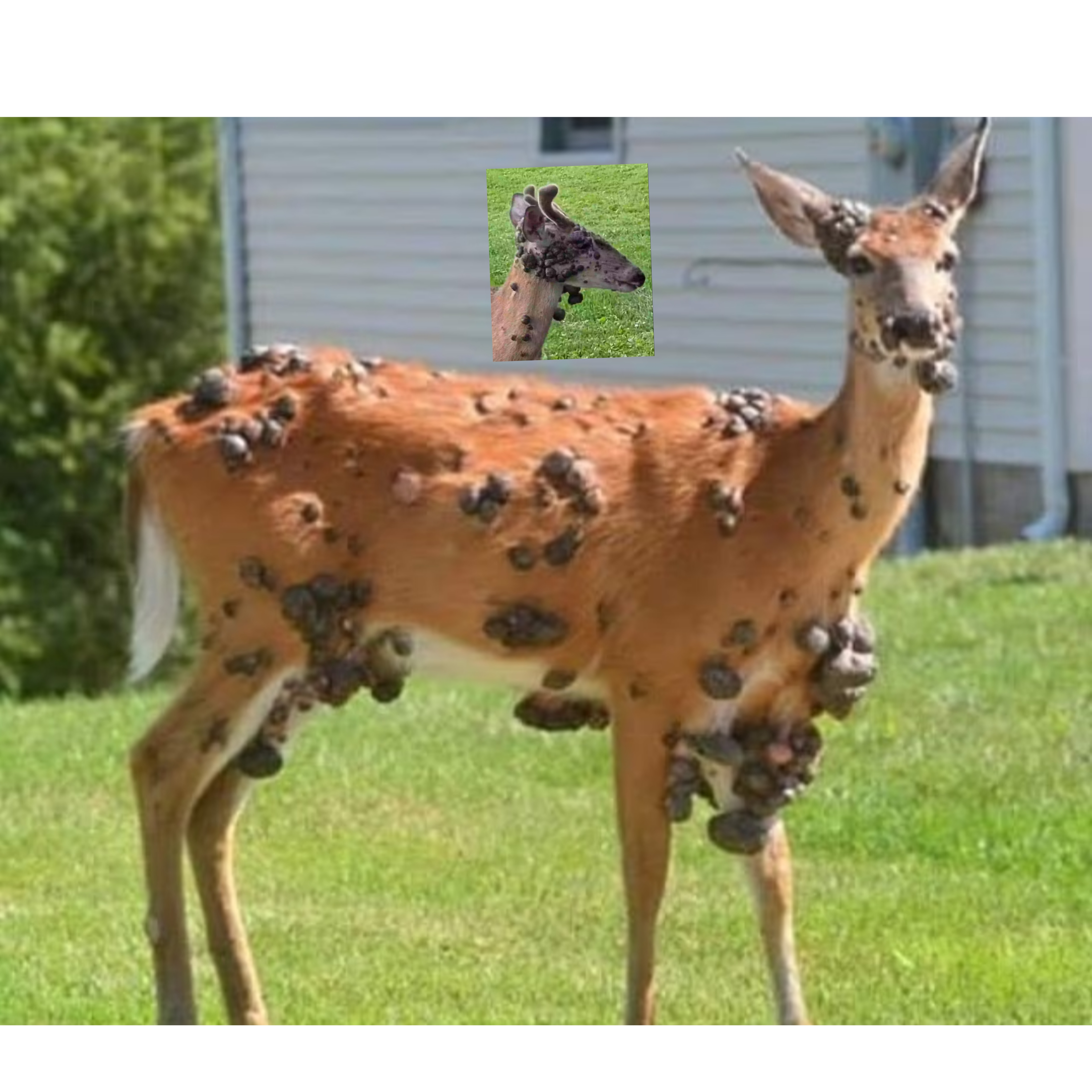
Strange photos from Pennsylvania and Wisconsin show deer with disturbing black flesh bubbles, sparking fears of an animal outbreak.
The condition, known as deer fibroma, is caused by a deer-specific papillomavirus similar to one affecting rabbits.
It produces dark, warty growths that usually shrink and vanish within months, though severe cases can lead to starvation or euthanasia.
Experts stress deer fibroma cannot infect humans, though ticks from deer can spread Lyme disease.
Climate change may be worsening these outbreaks by boosting mosquito and tick populations.
Wildlife officials have already identified the condition as deer cutaneous fibroma, better known as deer warts.
The condition is due to a virus transmitted between deer in all parts of the US, and experts have warned that it’s spreading this summer.
The virus mainly spreads through disease-carrying insects like mosquitoes and ticks, which pass on the blood of infected deer to healthy animals nearby.
Since these potentially deadly pests breed and multiply in warmer weather, Americans should expect to see more cases of the condition wherever deer may live.
The Washington Department of Fish and Wildlife said: ‘Papillomas are most frequently seen during the late summer and into the fall, probably due to increased biting insect activity during this time of year.’
Deer warts can be small, like a pea, or grow as big as a football, appearing gray, black, or fleshy and often hairless.
While disease-transmitting insects are believed to be the main culprit spreading the virus, direct contact with the warts may also infect deer.
Dr Kristin Mansfield, a wildlife veterinarian in Washington state, told FOX13 that deer can spread the virus if they share the same feeding areas, sleeping spot, or rubbing posts – usually a tree males use to mark their territory during mating season.
Deer warts are found across the entire range of white-tailed deer in North America, so they’re common throughout the US, with no specific state being much more affected than others.