46 people rushed to hospital from NYC’s 2 overdose prevention centers
The city Health Department, which oversees the two safe injection sites, refused to answer whether it keeps track of the outcome of the 46 people rushed to hospital either.
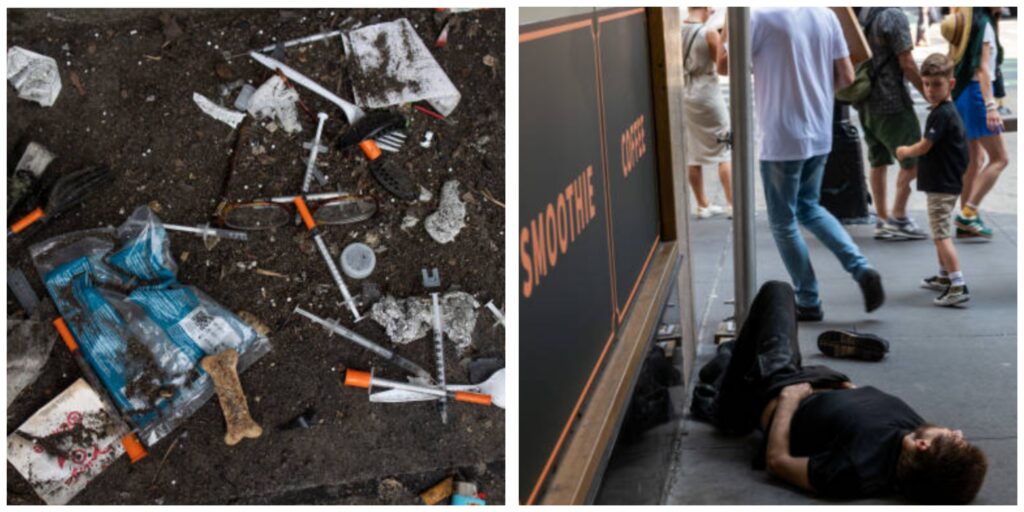
New York City’s two government-funded shooting galleries purport to prevent fatal overdoses — but at least 46 junkies had to be rushed by ambulance to the nearest hospital in cardiac arrest or with life-threatening strokes or seizures, records show.
Overdoses at the centers, meanwhile, went up 7%, from 636 to 683, between their first and second years, according to OnPoint’s newly released annual report.
OnPoint, the nonprofit that operates the two so-called safe injection sites in Harlem and Washington Heights, doesn’t even keep track of what happened to these people – or if they died, The Post has learned, an oversight critics are slamming as negligent.
There was also an increase in repeat visitors, with 177 clients coming in to do drugs more once a day in 2023, up 108% from 77 in 2022.
“We increased the overall number of visits and frequency of visits to the Overdose Prevention Centers. These are significant successes,” OnPoint bragged in its annual report.
Crack was the drug of choice among OnPoint users, with it being smoked as many as 56,175 times over the two-year period, followed by heroin, which was injected 48,714 times. Cocaine was snorted 30,721 times, and speedballs – a dangerous mix of heroin and cocaine – were injected 19,651 times.
Alarmingly, speedball use at the Washington Heights location more than doubled between year one and two, from 19% to 44%. In Harlem, the rise was more modest – from 5% to 7%.
Critics have long blasted the centers as keeping addicts hooked on drugs rather than getting them clean.
“It’s like, they’ve continued to do something that doesn’t work at greater scale. That’s nice, but there’s no measure of outcomes, which doesn’t surprise me, because the outcomes will not look good,” said Charles Lehman, a public policy expert at the Manhattan Institute.